
ERP Algeria: Understanding What an ERP (Integrated Business Management Software) Is
What is an ERP?
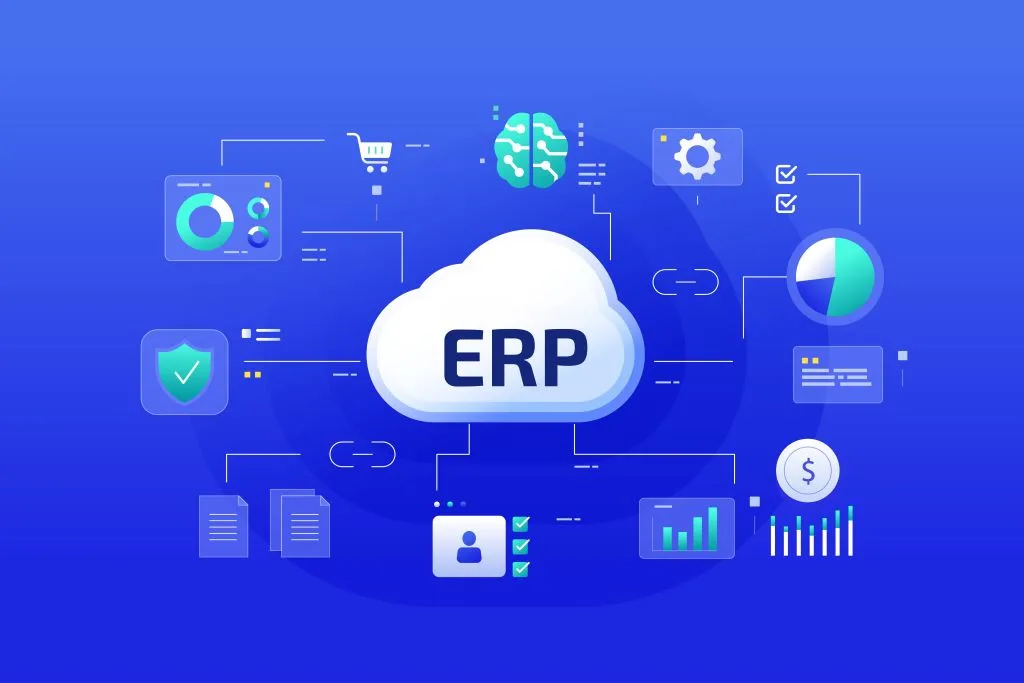
An ERP, or Enterprise Resource Planning, is essential software in the information systems of businesses in Algeria. It centralizes the management of operational processes by integrating various functions within a single database. The ERP thus facilitates performance, cost optimization, and resource management.
Definition
An ERP is a set of modules connected to a single database, enabling the management of all of a company's processes. It integrates various features such as order management, inventory management, payroll, accounting, e-commerce, and BtoB and BtoC commerce, among others. In short, an ERP is the "backbone" of a company, offering better collaboration and visibility through a centralized database.
To be considered an integrated management system, an ERP in Algeria must respect two fundamental principles:
- Modularity on a single database: IT applications must consist of independent but compatible modules, using a common database.
- Integrated Workflow: A Workflow engine is necessary to define and manage the tasks of a process across all modules.
How an integrated management system works
An ERP unifies the operational and administrative activities of a company, connecting different departments such as accounting, human resources, sales, and production. Here are the main steps in how an ERP works:
- Data collection: Data is centralized in the ERP system from various sources.
- Data storage: Data is kept in a centralized database, accessible to all departments.
- Data processing: Data is analyzed and made usable for the different departments.
- Data analysis: Data is examined to help decision-makers make informed decisions.
- Reporting: Reports are generated to provide an overview of the company's performance.
Users can access the data and features they need, thereby improving productivity and cross-departmental collaboration.
Key Components
Typical ERP modules include:
- Finance and accounting management: Tracking finances, invoicing, accounts, budgets, and tax declarations.
- Sales and purchasing management: Tracking customer orders, quotes, purchase orders, invoices, and payments.
- Inventory and operations management: Tracking inventory, supplier orders, production operations, and production plans.
- Human resources management: Tracking employee information, salaries, leave, and benefits.
- Supply chain management: Planning and managing activities related to purchasing, sales, and inventory.
Benefits
The main benefits of an ERP are:
- Centralization of information and processes: Better coordination between departments.
- Real-time overview: Better decision-making.
- Automation of repetitive tasks: Reduction of errors and time savings.
- Improved efficiency: Optimized processes, better resource planning, and enhanced competitiveness.
The ERP enables integrated real-time data management, helping with quick and precise decision-making, and improving inventory management and customer relations.
Choosing the right integrated management software in Algeria
Choosing an ERP in Algeria requires a thorough evaluation:
- Identify specific needs: Determine which processes to automate and which features are required.
- Research the supplier's reputation: Prefer suppliers with proven experience in your sector.
- Consider the user interface: Opt for an intuitive interface to facilitate adoption by users.
- Evaluate flexibility and scalability: Choose a solution that can adapt to growth and future needs.
- Integration with existing systems: Ensure compatibility with current tools and applications.
- Evaluate costs: Consider the initial cost, maintenance fees, and training and data migration costs.
Implementation challenges
Implementing an ERP in Algeria may face several challenges:
- Change management: Adapting work processes and overcoming employee resistance.
- High cost: Significant investment for implementation and maintenance, unlike GestiumERP where the cost is reasonable compared to European ERPs.
- Complexity: Need for user training due to the complexity of the system, unlike GestiumERP where the user experience (UX) is easy.
- Customization: Possible need for additional development to meet specific needs, unlike our ERP where customization is included in the initial cost.
- Data migration: Technical challenge related to migrating existing data (unlike our ERP where your data migration is guaranteed).
Which ERP should I choose?
GestiumERP clearly stands out as the best choice for Algerian businesses looking for an effective and accessible integrated management system. Unlike often costly and complex European solutions, GestiumERP offers reasonable pricing, an intuitive user experience, and built-in customization from the outset, with no hidden fees. The migration of existing data is handled, which facilitates the transition and reduces technical obstacles. This level of support and local adaptation places GestiumERP at the forefront of ERP solutions in Algeria, enabling businesses to optimize their processes, gain agility, and manage their investments while benefiting from support tailored to the realities of the Algerian market.
In summary, an ERP centralizes and synchronizes the data and processes of an Algerian company, offering significant advantages in terms of planning, decision-making, supply chain management, and customer relations. Each Algerian company must, however, evaluate its needs before choosing an appropriate ERP, whether proprietary or open source.
Feel free to visit our Facebook page to discover the latest news about our company